Image 1 of 1
Baseball Plant
The Icon of Geometric Perfection
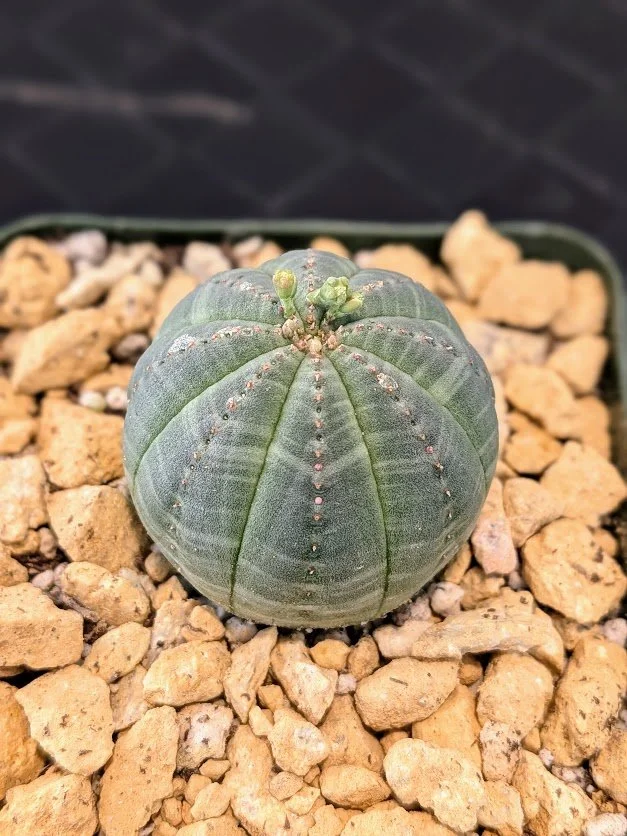
The Euphorbia obesa, commonly known as the Baseball Plant, is a true marvel of the botanical world. Native to the Great Karoo region of South Africa, this succulent has become a global icon for its near-perfect spherical form and its lack of traditional spines. It is an "endangered in the wild" species that thrives in cultivation, offering a clean, modern aesthetic for any plant lover.
Flawless Spherical Form: When young, the Euphorbia obesa is almost perfectly round, resembling a green baseball. As it matures, it may become slightly cylindrical, but it retains its smooth, sculptural "ball" shape throughout its life.
Intricate "Plaid" Patterning: The body is characterized by a beautiful, subtle canvas of horizontal stripes and vertical ribs. These markings often create a grey-green, purple, or reddish-brown "tartan" or plaid pattern, making each specimen look like a piece of living textile art.
Spineless and Safe: Unlike many of its desert neighbors, the Euphorbia obesa is completely spineless. Its "ribs" are topped with small, harmless blunt bumps (peduncles), making it a tactile and pet-friendly choice (though, like all Euphorbias, it contains a milky sap that should not be ingested).
Minimalist "Cyathia" Blooms: Instead of large showy petals, it produces tiny, delicate yellow-green flowers known as cyathia along the ridges of its crown. This species is dioecious, meaning individual plants are either male or female, making it a fun challenge for those interested in succulent breeding.
All potted plants are local pickup only. Shipped plants will be bare root (no pot or soil).
The Icon of Geometric Perfection
The Euphorbia obesa, commonly known as the Baseball Plant, is a true marvel of the botanical world. Native to the Great Karoo region of South Africa, this succulent has become a global icon for its near-perfect spherical form and its lack of traditional spines. It is an "endangered in the wild" species that thrives in cultivation, offering a clean, modern aesthetic for any plant lover.
Flawless Spherical Form: When young, the Euphorbia obesa is almost perfectly round, resembling a green baseball. As it matures, it may become slightly cylindrical, but it retains its smooth, sculptural "ball" shape throughout its life.
Intricate "Plaid" Patterning: The body is characterized by a beautiful, subtle canvas of horizontal stripes and vertical ribs. These markings often create a grey-green, purple, or reddish-brown "tartan" or plaid pattern, making each specimen look like a piece of living textile art.
Spineless and Safe: Unlike many of its desert neighbors, the Euphorbia obesa is completely spineless. Its "ribs" are topped with small, harmless blunt bumps (peduncles), making it a tactile and pet-friendly choice (though, like all Euphorbias, it contains a milky sap that should not be ingested).
Minimalist "Cyathia" Blooms: Instead of large showy petals, it produces tiny, delicate yellow-green flowers known as cyathia along the ridges of its crown. This species is dioecious, meaning individual plants are either male or female, making it a fun challenge for those interested in succulent breeding.
All potted plants are local pickup only. Shipped plants will be bare root (no pot or soil).
Euphorbia obesa
Care and Growing
The Baseball Plant is a slow-growing, highly resilient succulent that is exceptionally easy to maintain as a windowsill companion.
Light Needs: Prefers Bright, Indirect Light to Full Sun. While it can handle direct morning sun, very intense midday sun in hot climates can cause "sunburn" or bronzing of the skin. Bright light is essential to maintain its tight, spherical shape.
Water Needs: Low to Moderate. It is more sensitive to overwatering than many cacti. Use the "soak and dry" method, ensuring the soil is completely dry before watering again. Reduce watering significantly in the winter months.
Soil Needs: Requires Extremely Well-Draining, Gritty Soil. A mixture of cactus compost with a high percentage of pumice, perlite, or coarse sand is ideal to prevent moisture from sitting near the base.
Temperature & Hardiness: Best kept in temperatures above 50°F (10°C). It is not frost-hardy and should be brought indoors or kept in a heated greenhouse during the winter months.
Add the timeless, architectural elegance of the Baseball Plant to your collection—a must-have for lovers of geometric nature!
At-Home Care
Every purchase comes bundled with a free subscription to Greg, the award-winning plant care app and community.
You'll receive plant care reminders, plant health tips, and help from a community of other customers that will ensure you become a pro plant parent in no time.