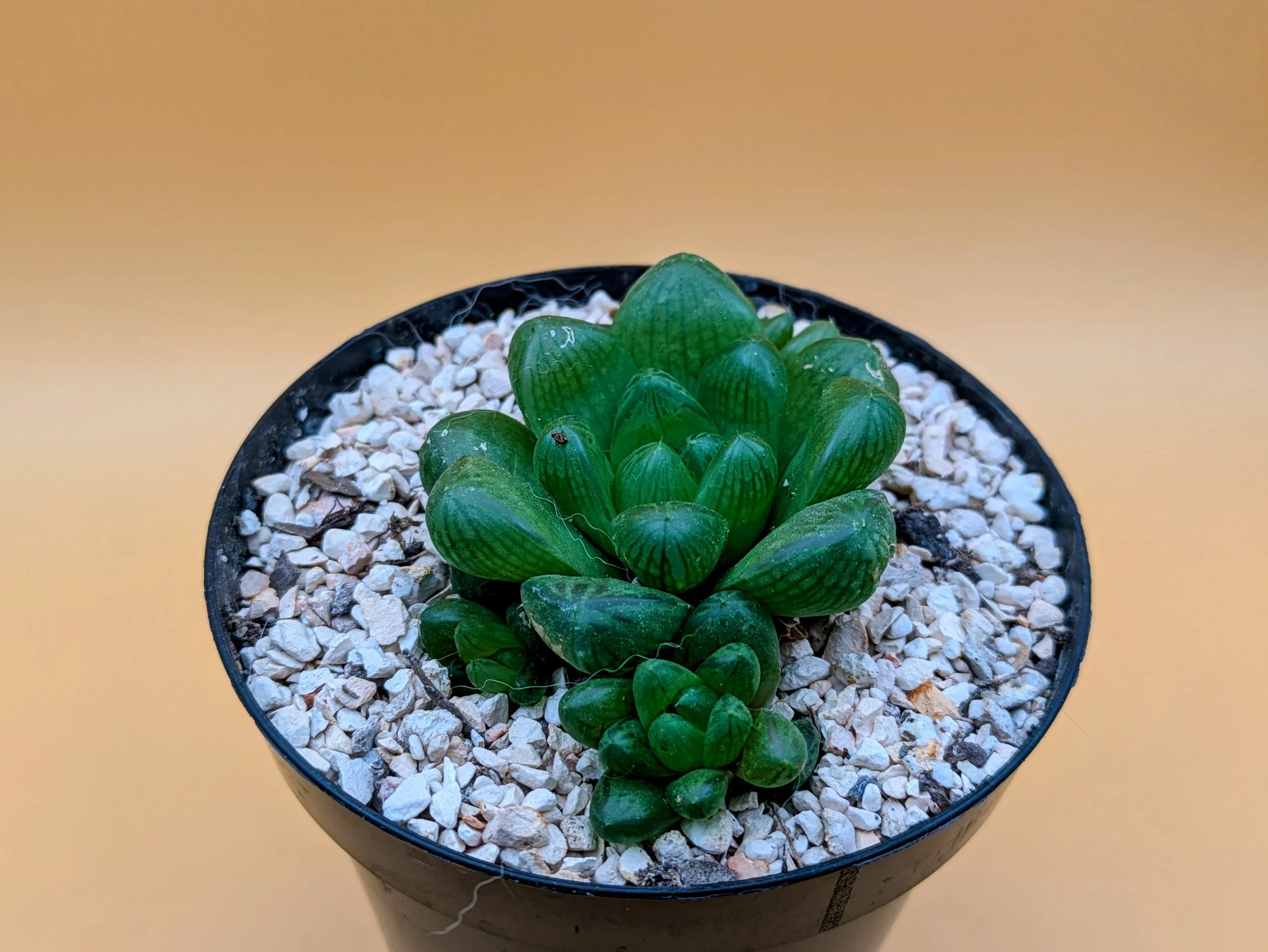
Cushion Aloe

$10.00

A Plump and Luminous Living Gem

The Haworthia obtusa (scientifically classified as a variety of Haworthia cymbiformis), universally known as the Cushion Aloe or Star Window Plant, is a deeply fascinating succulent from the Eastern Cape Province of South Africa. It breaks the mold of standard, rigid rosettes by producing chunky, swollen leaves that look exactly like a tight cluster of emerald water balloons or polished sea glass.

  • Translucent "Window" Leaf Tips: The absolute highlight of H. obtusa is its clear, jelly-like top facets. These translucent "epidermal windows" allow sunlight to penetrate deep into the interior of the leaf for photosynthesis—giving the plant a luminous, glowing effect when backlit by a window.

  • Plump, Smooth Geometry: Cultivars of this group boast completely smooth, rounded leaf edges, contrasting with species that feature fine, bristly teeth along their leaf margins. The leaves are thick, glossy, and tightly packed into an incredibly neat, rounded cushion shape.

  • Stunning Light Reactions: While its baseline color is a brilliant, clear lime green, the plant responds beautifully to bright lighting. When exposed to subtle temperature changes or ideal bright ambient light, the tips can blush with shades of warm pink, copper, or deep red.

  • Charming Glassy Colonies: A relatively fast grower for a miniature houseplant, a single mother rosette will readily push out tiny offsets from her base. Over time, these melt together into a dense, dome-shaped "cushion" of glassy rosettes that fills out small planters perfectly.

All potted plants are local pickup only. Shipped plants will be bare root (no pot or soil).

A Plump and Luminous Living Gem

The Haworthia obtusa (scientifically classified as a variety of Haworthia cymbiformis), universally known as the Cushion Aloe or Star Window Plant, is a deeply fascinating succulent from the Eastern Cape Province of South Africa. It breaks the mold of standard, rigid rosettes by producing chunky, swollen leaves that look exactly like a tight cluster of emerald water balloons or polished sea glass.

  • Translucent "Window" Leaf Tips: The absolute highlight of H. obtusa is its clear, jelly-like top facets. These translucent "epidermal windows" allow sunlight to penetrate deep into the interior of the leaf for photosynthesis—giving the plant a luminous, glowing effect when backlit by a window.

  • Plump, Smooth Geometry: Cultivars of this group boast completely smooth, rounded leaf edges, contrasting with species that feature fine, bristly teeth along their leaf margins. The leaves are thick, glossy, and tightly packed into an incredibly neat, rounded cushion shape.

  • Stunning Light Reactions: While its baseline color is a brilliant, clear lime green, the plant responds beautifully to bright lighting. When exposed to subtle temperature changes or ideal bright ambient light, the tips can blush with shades of warm pink, copper, or deep red.

  • Charming Glassy Colonies: A relatively fast grower for a miniature houseplant, a single mother rosette will readily push out tiny offsets from her base. Over time, these melt together into a dense, dome-shaped "cushion" of glassy rosettes that fills out small planters perfectly.

All potted plants are local pickup only. Shipped plants will be bare root (no pot or soil).

Haworthia obtusa

Care and Growing

The Cushion Aloe is a highly forgiving, low-maintenance succulent that is perfectly adapted to the ambient conditions of indoor spaces.

  • Light Needs: Prefers Bright, Indirect Light to Gentle Morning Sun. It thrives on east- or west-facing windowsills. Avoid harsh, direct midday sun, which can bleach its delicate glass windows or cause severe leaf scorch.

  • Water Needs: Low. Use the strict "soak and dry" methodology. Water deeply only when the potting substrate is completely dry. Because this species goes semi-dormant during the peak heat of summer, cut back on watering during that time and keep it mostly dry in the winter.

  • Soil Needs: Requires a Highly Porous, Gritty Mineral Medium. A mix containing 60-70% inorganic grit—such as pumice, perlite, or coarse sand—is necessary to ensure the plant’s thick, drought-resistant roots never sit in stagnant water.

  • Temperature & Hardiness: Best kept in temperatures above 50°F (10°C). It is not frost-hardy and should be grown as a houseplant or kept in a climate-controlled room if outdoor temperatures drop near freezing.

Introduce the magical, translucent charm of the Cushion Aloe to your collection—a miniature jewel box plant that proves succulents can be soft, fluid, and brilliantly glassy!