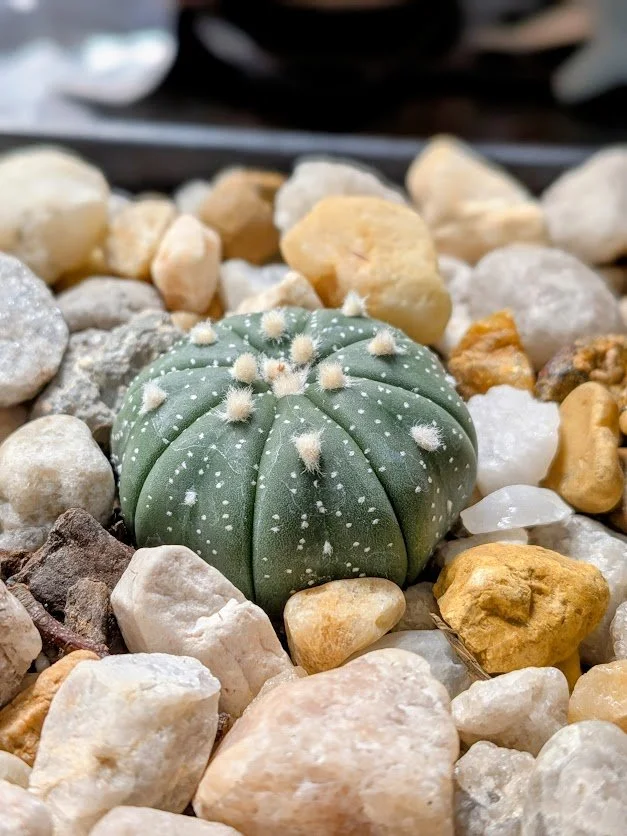
Sand Dollar Cactus

$38.00

A Masterpiece of Natural Symmetry

The Astrophytum asterias, commonly known as the Sand Dollar Cactus or Sea Urchin Cactus, is perhaps the most iconic and sought-after species in the Astrophytum genus. Native to the small, sun-drenched patches of the Rio Grande Valley and Northern Mexico, this cactus is a miracle of minimalist design, evolving a completely spineless body that mimics the stones and textures of its desert home.

  • Iconic "Sand Dollar" Form: This cactus grows as a low, squat, and perfectly symmetrical disc. It sits flush with the soil surface in the wild, resembling a green sea urchin or a fossilized sand dollar. Its lack of spines makes it smooth to the touch and highlights its clean, geometric lines.

  • Intricate "Starry" Flocking: The deep forest-green body is divided into 8 uniform ribs, each adorned with a central line of woolly, white circular areoles. The entire surface is often sprinkled with tiny, raised white "dots" or flocking, giving the plant a celestial, starry appearance.

  • Large Silk-Textured Blooms: Despite its small size, the asterias produces massive, lustrous yellow flowers with a vibrant, contrasting red or orange throat. These blooms emerge from the very center of the "star" and carry a delicate, satiny sheen that glows in the sunlight.

  • A Living Collector's Gem: Because it is slow-growing and increasingly rare in the wild, the Sand Dollar Cactus is considered a "crown jewel" for succulent enthusiasts. It is the perfect centerpiece for a minimalist staging or a specialized "stone" garden.

All potted plants are local pickup only. Shipped plants will be bare root (no pot or soil).

A Masterpiece of Natural Symmetry

The Astrophytum asterias, commonly known as the Sand Dollar Cactus or Sea Urchin Cactus, is perhaps the most iconic and sought-after species in the Astrophytum genus. Native to the small, sun-drenched patches of the Rio Grande Valley and Northern Mexico, this cactus is a miracle of minimalist design, evolving a completely spineless body that mimics the stones and textures of its desert home.

  • Iconic "Sand Dollar" Form: This cactus grows as a low, squat, and perfectly symmetrical disc. It sits flush with the soil surface in the wild, resembling a green sea urchin or a fossilized sand dollar. Its lack of spines makes it smooth to the touch and highlights its clean, geometric lines.

  • Intricate "Starry" Flocking: The deep forest-green body is divided into 8 uniform ribs, each adorned with a central line of woolly, white circular areoles. The entire surface is often sprinkled with tiny, raised white "dots" or flocking, giving the plant a celestial, starry appearance.

  • Large Silk-Textured Blooms: Despite its small size, the asterias produces massive, lustrous yellow flowers with a vibrant, contrasting red or orange throat. These blooms emerge from the very center of the "star" and carry a delicate, satiny sheen that glows in the sunlight.

  • A Living Collector's Gem: Because it is slow-growing and increasingly rare in the wild, the Sand Dollar Cactus is considered a "crown jewel" for succulent enthusiasts. It is the perfect centerpiece for a minimalist staging or a specialized "stone" garden.

All potted plants are local pickup only. Shipped plants will be bare root (no pot or soil).

Sand Dollar Cactus

Care and Growing

The Sand Dollar Cactus is a "slow and steady" grower that rewards the patient gardener with its incredible precision and reliable seasonal blooms.

  • Light Needs: Prefers Bright, Filtered Light to Partial Sun. While it loves light, its smooth skin is more prone to sunscorch than spiny cacti. In hot climates, bright morning sun with afternoon filtered light is the "sweet spot" for maintaining its deep green color.

  • Water Needs: Very Low. This is a tap-rooted species that is extremely sensitive to overwatering. Use a strict "soak and dry" method, and ensure the soil is 100% dry before watering again. Keep it completely dry during the winter dormancy.

  • Soil Needs: Requires Mineral-Heavy, Gritty Soil. A mix of 70-80% inorganic material (pumice, lava rock, crushed granite, or limestone) is essential. It thrives in a substrate that allows for maximum airflow to the roots.

  • Temperature & Hardiness: Best kept in temperatures above 50°F (10°C). While it can survive brief dips near freezing if kept bone-dry, it is a tender species that prefers to stay warm and frost-free.

Add the quiet, celestial elegance of the Sand Dollar Cactus to your collection—a true testament to the beauty of botanical geometry!


At-Home Care

Every purchase comes bundled with a free subscription to Greg, the award-winning plant care app and community.

You'll receive plant care reminders, plant health tips, and help from a community of other customers that will ensure you become a pro plant parent in no time.